
By Dr Pranab Gyawali, Consultant Gastroenterologist
|
In my 25 years as a gastroenterologist treating patients with Crohn’s disease, ulcerative colitis (UC), and complex gut symptoms, it is only recently that I have seen such a massive surge of interest in BPC 157.
Patients frequently ask me if this "gut healing peptide" can treat inflammation, reverse a leaky gut, or manage irritable bowel syndrome (IBS) flares. Much of this tracking stems from wellness blogs, Reddit forums, peptide clinics, and social media. If you are searching for alternative options for inflammatory bowel disease (IBD), it is completely natural to be curious.
But my clinical position remains clear: I do not recommend BPC 157 as a treatment for Crohn's disease or ulcerative colitis, and I remain highly skeptical.
While peptide science itself is fascinating, clinical interest is not the same as clinical proof. To date, there is a distinct lack of high-quality human IBD trial data validating its safety or efficacy.
Before we dive into the background science, here is an essential regulatory update.
23 July 2026 FDA committee update: what changed for BPC-157?
The headlines sound positive, but FDA has not approved BPC-157 or made its final decision. On 23 July 2026, an advisory panel narrowly recommended allowing compounding pharmacies to prepare it. The vote was 8 to 6, with one abstention.
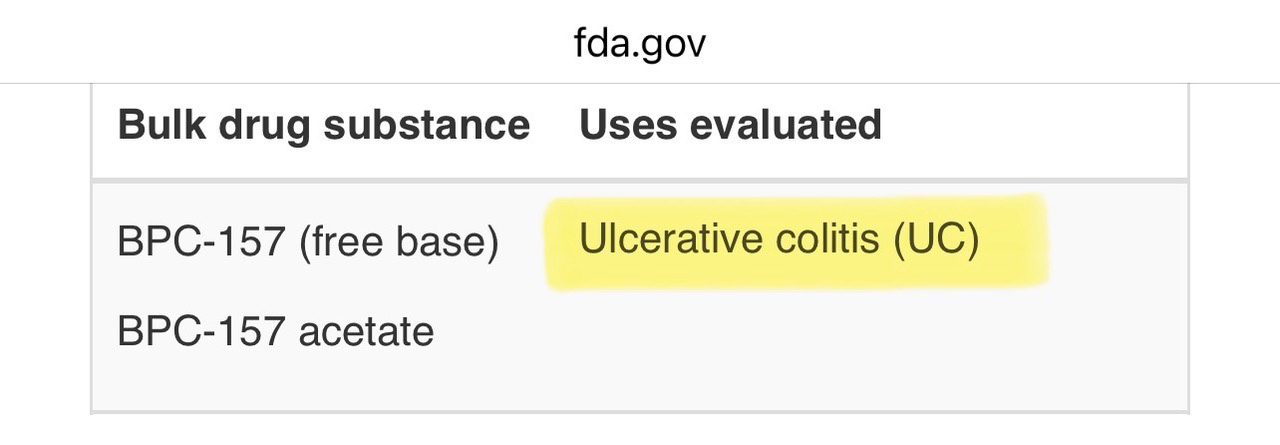
FDA's scientific reviewers recommended against listing both forms. They found only one small exploratory ulcerative-colitis study with too little detail for firm conclusions, no clinical studies in Crohn's disease, and continuing concerns about product quality and safety.
FDA may take weeks or months to decide. Listing could make BPC-157 easier to obtain through US compounding pharmacies, but access is not evidence or FDA approval. My view has not changed: BPC-157 lacks adequate human evidence for ulcerative colitis, Crohn's disease or "gut healing", and it should not replace established IBD treatment. I will keep tracking the FDA decision and any proper human trials.
BPC 157 for IBD: The Quick Facts
| Question | Clinical Reality |
|---|---|
| Is BPC 157 FDA approved for human use? | No. It is not approved for any human medical condition. |
| Is it proven for Crohn’s or Ulcerative Colitis? | No. There are zero robust, published human clinical trials for IBD. |
| What happened at the July 2026 FDA meeting? | The advisory committee narrowly recommended listing both forms, but FDA's scientific reviewers recommended against it. FDA has not made its final decision, and the vote did not prove that BPC-157 works. |
| Is BPC 157 allowed in professional sports? | No. WADA (World Anti-Doping Agency) has strictly banned it as an unapproved substance. |
BPC 157 (Body Protection Compound 157) is a synthetic peptide made up of 15 amino acids. It is engineered to mimic a partial sequence of a protective peptide natively found in human gastric juice.
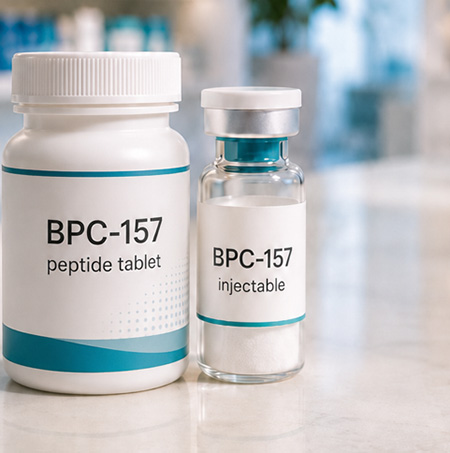
In animal models, BPC 157 demonstrates intriguing biological activity. It has been shown to accelerate tissue repair,promote angiogenesis (the formation of new blood vessels), and minimize damage caused by induced gut injuries or NSAID-induced ulcers. This laboratory data is exactly what fuels the online marketing machine labeling it as the ultimate "gut-lining healer."
In experimental rodent models of colitis, BPC 157 has shown real success in reducing tissue inflammation. However,translating success from a sterile laboratory mouse to a human living with complex, multi-factorial Crohn's disease or ulcerative colitis is incredibly difficult.
No Published Human Trials: There are no robust, large-scale human clinical trials showing BPC 157 can safely induce or maintain clinical remission in IBD.
Purity and Manufacturing Risks: Because it is unapproved, sourcing BPC 157 through peptide clinics or online vendors exposes you to significant risk regarding product purity, inaccurate dosing, and chemical contaminants.
Immune Reactivity: The FDA has previously flagged concerns that compounded peptides like BPC 157 carry risks of triggering unexpected immune or allergic reactions.
If you have already tried and failed first-line therapies or advanced biologics, subbing in an unverified peptide exposes you to a genuine risk of an uncontrolled disease flare.
The "Leaky Gut" and IBS Narrative
A massive portion of the online search volume for BPC 157 revolves around fixing "leaky gut syndrome" or calming irritable bowel syndrome (IBS).
While rodent studies suggest that BPC 157 interacts with tight junctions to decrease intestinal permeability, we lack any validated human data confirming this effect.
In clinical gastroenterology, "leaky gut" is not a primary medical diagnosis like Crohn's disease or celiac disease.Increased intestinal permeability is a secondary consequence of underlying inflammation, dietary triggers, or microbiome dysbiosis.
Furthermore, there is zero data showing that BPC 157 fixes the underlying mechanisms of IBS—such as visceral hypersensitivity (hypersensitive gut nerves), altered gut-brain signaling, or abnormal gut motility.
To see my deep-dive analysis from when this trend first escalated, you can watch my original video below:
A Gastroenterologist’s Approach: Evidence Based Assessment
If you have persistent gut symptoms, recurrent flares, bloating, food intolerance or concerns about inflammatory bowel disease, it is important not to rely on unproven supplements or online peptide claims alone.
In gastroenterology, the first step is usually to understand what is driving the symptoms. Similar symptoms can come from active inflammation, IBS overlap, infection, bile acid diarrhoea, small intestinal bacterial overgrowth, food intolerance, medication effects or other causes.
Objective inflammation assessment: Depending on the clinical situation, assessment may include blood tests, stool markers such as faecal calprotectin, imaging, colonoscopy, gastroscopy or other investigations to understand whether symptoms are linked to active inflammation or another gut condition.
Reviewing previous IBD treatment response: If a biologic or advanced IBD treatment has not worked as expected, it may be appropriate to review treatment history, disease activity, drug levels, antibodies, timing of response and whether symptoms are due to inflammation or an overlapping condition.
Diet, microbiome and symptom context: Diet and microbiome factors can be relevant in selected patients, but they should be considered alongside clinical assessment rather than used as a replacement for evidence based IBD care. Dietary approaches may include structured anti inflammatory dietary patterns, Mediterranean style eating or symptom directed plans where appropriate.
The aim is not to dismiss patient interest in new therapies. The aim is to separate promising ideas from treatments that have been properly tested in humans, especially when Crohn’s disease or ulcerative colitis may be active.

Frequently Asked Questions
Is BPC 157 FDA approved for ulcerative colitis or Crohn's disease?
No. BPC 157 is not FDA approved to treat ulcerative colitis, Crohn's disease, IBS, or any other medical condition in humans.
Did the July 2026 FDA committee vote approve BPC-157?
No. The advisory committee narrowly recommended listing both forms, but FDA's scientific reviewers recommended against it. FDA has not made its final decision. The vote did not approve BPC-157 or show that it treats ulcerative colitis, Crohn's disease or "gut healing".
Can oral BPC 157 heal a damaged gut lining?
While animal models show promising tissue repair dynamics, there is no high-quality human data confirming that oral or injectable BPC 157 can safely heal the human intestinal mucosa or cure increased intestinal permeability.
Should I stop my current IBD biologic or immunosuppressant for BPC 157?
Absolutely not. Discontinuing an evidence-based IBD therapy like a biologic in favor of an unregulated peptide carries an exceptionally high risk of inducing a severe, uncontrolled disease flare that could lead to hospitalization or surgery. Any change to your treatment plan must be decided with your gastroenterologist.
References & Clinical Resources
- FDA Pharmacy Compounding Advisory Committee Meeting Agenda (July 2026)
- FDA Safety Alerts on Compounded Bulk Drug Substances
- World Anti-Doping Agency (WADA) Prohibited List: Category S2 (Peptide Hormones and Growth Factors)
Medical Disclaimer: This article is for general educational purposes only. It does not constitute personal medical advice and must not replace a formal consultation, diagnosis, or treatment plan from a qualified healthcare provider. Always consult your personal gastroenterologist before starting or altering any treatment protocol.
Recommended IBD Guides
- Crohn’s disease treatment
- Ulcerative colitis treatment
- Learn about Biologicals used in UC and Crohn’s in Dubai
- Gut microbiome in Crohn’s disease and ulcerative colitis
- Predicting biologic treatment success in Crohn’s and ulcerative colitis
- How biologics work in Crohn’s and colitis
- Why not to stay on steroids in Crohn’s and colitis
Natural Supplements, Gut Barrier and IBD
- Top leaky gut supplements for Crohn’s, UC and IBS
- Aloe vera for Crohn’s and ulcerative colitis
- Slippery elm for Crohn’s and ulcerative colitis
- Black cumin seed oil for Crohn’s and ulcerative colitis
- Curcumin and Qing Dai in ulcerative colitis
- Vitamin D and gut health in Crohn’s, colitis and IBS
- Supplements and gut health
- Leaky gut in Crohn’s and ulcerative colitis
- Four science backed tips to support your gut barrier in Crohn’s or UC
Diet, Microbiome and IBD Inflammation
- Diet, microbiome and biologic response in IBD
- How the Oxygen Trap may drive IBD
- Gut microbiome and Crohn’s disease flares
- How gut bacteria unlock natural anti inflammatory pathways
- Crohn’s disease diet and gut friendly foods
- Can food help calm Crohn’s disease?
- Foods to avoid in Crohn’s and colitis
- Plant based diet and Crohn’s disease
- Elemental diet in Crohn’s disease
- Probiotics for Crohn’s and ulcerative colitis
Modern IBD Treatment and Precision Biologics
- IBD treatment update for Crohn’s and colitis patients in Dub
- Rinvoq for Crohn’s and ulcerative colitis
- Tremfya guselkumab for Crohn’s and colitis
- Tremfya long term results in ulcerative colitis
- New omics research predicting biologic response in IBD
- Predicting vedolizumab response early in IBD
- Vedolizumab in Crohn’s disease and why timing may change results
- Icotrokinra oral IL-23 therapy for Crohn’s and ulcerative colitis
- How we choose the right biologic for Crohn’s and ulcerative colitis
IBD Symptoms, Deficiencies and Safety Checks
- SIBO in Crohn’s and ulcerative colitis
- Iron deficiency and anaemia in Crohn’s and ulcerative colitis
- B12 and folate deficiency in Crohn’s and ulcerative colitis
- Rectal bleeding in Dubai
- Gluten and IBD
- Flu vaccines for IBD patients on biologics
- Stress and the gut brain axis in IBD
IBD Tests, Monitoring and Gut Health Investigations
- Capsule endoscopy for small bowel Crohn’s disease
- Hydrogen and methane breath test for SIBO
- Gut microbiome test in Dubai
- MRI abdomen and MR enterography for Crohn’s disease
- CT abdomen and CT enterography for Crohn’s disease
- Diagnostic tests for gastrointestinal disorders
If you wish to discuss this further or would like to make an appointment, please use the booking form on this page. Expect a response within 12 business hours.