
2026 Update from a UK-trained gastroenterologist in Dubai.
I am genuinely pleased to bring this update to people living with ulcerative colitis.
For years, the probiotic space in ulcerative colitis has been frustrating. There are only one or two probiotic approaches that I have found genuinely useful, and one of the best known, E. coli Nissle 1917, is more than 100 years old. That is why MH002 matters.
MH002 is not an ordinary probiotic from a pharmacy shelf. It is a next generation probiotic like treatment, technically known as a live biotherapeutic product, being studied in mild to moderate ulcerative colitis.
I am Dr Pranab Gyawali, a UK trained consultant gastroenterologist with more than 25 years of experience looking after patients with inflammatory bowel disease. I have followed microbiome based treatments closely because I believe this is one of the most important future directions in ulcerative colitis care.
MH002 has now received FDA Fast Track designation. This does not mean it is approved. But it does mean this treatment has shown enough early promise, and that ulcerative colitis remains an area with real unmet need. MH002 is being evaluated in the STARFISH UC Phase 2b study in mild to moderate ulcerative colitis.
Video: MH002 and ulcerative colitis
In this short VLOG, I explain why I am pleased to see MH002 moving forward, why it is different from ordinary probiotics and why it may be important for future ulcerative colitis treatment.
Quick patient summary
| Question | Short answer |
|---|---|
| What is MH002? | A next generation probiotic like live biotherapeutic product. |
| What is it being studied for? | Mild to moderate ulcerative colitis. |
| Is MH002 approved? | No. FDA Fast Track is not approval. |
| Why is it interesting? | It targets the gut microbiome, gut lining, gut environment and butyrate production. |
| What is the next study? | STARFISH UC, a Phase 2b trial in about 204 patients. |
| Should patients buy probiotics instead? | No. MH002 is not an ordinary over the counter probiotic. |
What is MH002?
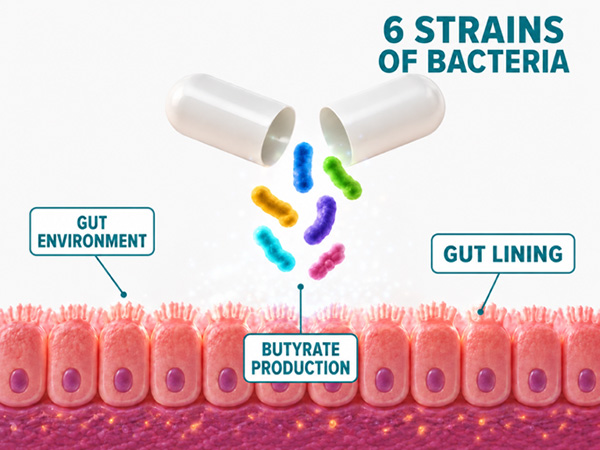
MH002 is a rationally designed live microbial consortium. In simpler terms, it is made from six selected commensal bacterial strains designed to work together.
This is different from taking a general probiotic supplement. Most ordinary probiotics are marketed for broad gut health. MH002 is being developed as a defined treatment candidate, with clinical trials, safety monitoring and proper outcome measures.
The best patient friendly description is:
MH002 is a next generation probiotic like medicine being studied for ulcerative colitis.
The more precise scientific description is:
MH002 is an investigational live biotherapeutic product made from six selected commensal bacterial strains.
Why is the FDA Fast Track update important?
FDA Fast Track does not mean MH002 is approved.
It means the FDA recognises the potential of MH002 to address an unmet need and allows closer communication with the FDA during development.
That matters because ulcerative colitis still has major gaps. Some patients are not fully controlled with standard medicines. Others need repeated steroids, escalation to advanced therapy, or biologics. The microbiome and gut environment remain important areas where we still need better treatment approaches.
What evidence supports MH002 so far?
The earlier Phase 2a study of MH002 was a small multicentre, double blind, randomised, placebo controlled trial in 45 patients with mild to moderate ulcerative colitis.
It was mainly designed to evaluate safety, but it also looked at early efficacy and mechanistic effects. The early results were encouraging, including reported signals in symptoms, faecal calprotectin, microbiome recovery and mucosal healing.
This is important, but it needs to be interpreted carefully.
MH002 is promising enough to follow closely, but not proven enough to use as an approved treatment.
How might MH002 work in ulcerative colitis?
This is the part I find most interesting.
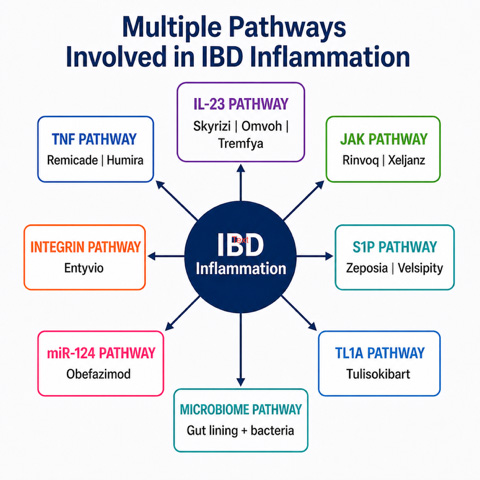
Most ulcerative colitis treatments focus on the immune system. We talk about pathways such as TNF, IL 23, JAK, S1P and other inflammatory signals.
MH002 is different because it is trying to work on the gut environment.
A 2025 scientific paper described MH002 as a butyrate producing consortium of six commensal bacterial strains with immune modulatory and mucosal healing properties. The work evaluated MH002 in laboratory, tissue and animal models that mimic IBD related problems such as disrupted intestinal permeability and immune activation.
For patients, the simple explanation is:
MH002 is designed to support the gut lining, improve the gut environment and produce helpful bacterial signals such as butyrate.
Is MH002 just another probiotic?
No.
This is one of the most important patient messages.
| Ordinary probiotic | MH002 style live biotherapeutic product |
|---|---|
| Usually sold as a general supplement | Developed as a defined treatment candidate |
| Often marketed for general gut health | Being studied for ulcerative colitis |
| Usually not designed around one IBD mechanism | Designed around microbiome and gut environment mechanisms |
| Often not tested like a medicine | Being tested in placebo controlled trials |
| Should not replace UC treatment | Investigational and not yet approved |
So the message is not:
“Go and buy more probiotics.”
The message is:
“The microbiome is becoming a serious treatment pathway when tested properly.”
What is the STARFISH UC study?
STARFISH UC is the next larger study of MH002.
It is a randomised, double blind, placebo controlled Phase 2b clinical trial expected to include around 204 patients with mild to moderate ulcerative colitis not adequately controlled by 5 ASA, with or without low dose steroids.
| STARFISH UC feature | Detail |
|---|---|
| Treatment | MH002 |
| Condition | Mild to moderate ulcerative colitis |
| Study phase | Phase 2b |
| Planned patients | About 204 |
| Background treatment | 5 ASA, with or without low dose steroids |
| Design | Randomised, double blind, placebo controlled |
| Induction period | 12 weeks |
| Longer follow up | 40 week open label extension |
| Key results | Expected in 2027 |
This is the study that should give a clearer answer about whether MH002 can become a practical treatment option for selected UC patients.
Where does MH002 fit among ulcerative colitis treatment pathways?
Ulcerative colitis is not driven by one pathway alone.
We already have treatments targeting immune pathways such as TNF, IL 23, JAK, S1P and integrin signalling. MH002 sits in a different category: the microbiome and gut environment pathway.
Will MH002 replace biologics?
No. That is not how I would think about it.
My view is that next generation probiotics such as MH002 are unlikely to replace biologics or other immune pathway treatments.
A more realistic future is combination thinking. One treatment may target the immune pathway. Another may help improve the gut environment, gut lining and bacterial signals that keep inflammation going.
That is why I am interested in MH002. It targets a part of the ulcerative colitis pathway that we have not yet cracked properly.
Should ulcerative colitis patients take probiotics now?
Not automatically.
If you have ulcerative colitis, the first question is not:
“Which probiotic should I take?”
The first question is:
“Is my colitis active, and how active is it?”
If there is rectal bleeding, diarrhoea, weight loss, anaemia, raised faecal calprotectin or ongoing inflammation, probiotics should not delay proper assessment or treatment.
Some probiotic approaches may have a role in selected UC patients, but ordinary probiotics are not a substitute for proper ulcerative colitis treatment.
Why this update matters for patients
MH002 is not approved.
It is not available as a routine treatment.
It does not prove that ordinary probiotics treat ulcerative colitis.
But it is a hopeful and important update because it shows that microbiome based treatment is being tested in a more serious way.
For years, the probiotic discussion has been dominated by supplements, marketing and uncertainty. MH002 represents a different direction: defined bacterial strains, a defined mechanism, a placebo controlled trial and a proper regulatory pathway.
That is why I will be following this closely.
Frequently Asked Questions
Is MH002 approved for ulcerative colitis?
No. MH002 is not approved for ulcerative colitis. It has received FDA Fast Track designation, which supports further development and review, but this is not the same as approval.
What does FDA Fast Track mean for MH002?
FDA Fast Track means the FDA recognises that MH002 may address an unmet treatment need in mild to moderate ulcerative colitis and allows closer communication during development.
What is MH002?
MH002 is a next generation probiotic like live biotherapeutic product made from six selected commensal bacterial strains. It is being studied in mild to moderate ulcerative colitis.
Is MH002 the same as a normal probiotic?
No. MH002 is not an ordinary over the counter probiotic. It is a defined live biotherapeutic product being tested in clinical trials.
What is STARFISH UC?
STARFISH UC is the Phase 2b study of MH002 in mild to moderate ulcerative colitis. It is expected to include about 204 patients not adequately controlled on 5 ASA, with or without low dose steroids.
How does MH002 work?
MH002 is designed to influence the gut environment. It is a six strain butyrate producing bacterial consortium that may support the gut lining, improve barrier integrity and modulate inflammation.
When will we know whether MH002 works?
The larger STARFISH UC study is expected to provide key results in 2027.
Can MH002 replace biologics?
There is no evidence currently showing that MH002 can replace biologics. A more realistic future possibility is that microbiome based treatments may complement immune pathway treatments in selected patients.
Is MH002 relevant for Crohn’s disease?
The current FDA Fast Track update is for mild to moderate ulcerative colitis. It should not be presented as a Crohn’s disease treatment at this stage.
Should I take probiotics if I have ulcerative colitis?
Do not rely on probiotics to treat active ulcerative colitis inflammation. If you have bleeding, diarrhoea, weight loss, anaemia or raised inflammatory markers, discuss this with your gastroenterologist.
Recommended Guides
Next Generation Probiotics and Microbiome Therapy
- Are probiotics automatically good for gut health?
- Next generation probiotics in Crohn’s and ulcerative colitis
- Engineered probiotic for ulcerative colitis 2026
- E. coli Nissle 1917 probiotic in ulcerative colitis
- MB310 probiotic trial in ulcerative colitis
- Probiotics for ulcerative colitis, what actually works
- FMT and infliximab in IBD, could the microbiome help biologics work better?
Diet, Microbiome and Gut Barrier
- Gut microbiome in Crohn’s disease and ulcerative colitis
- Diet, microbiome and IBD inflammation
- Oxygen trap, microbiome and IBD diet
- Leaky gut in Crohn’s and ulcerative colitis
- Four science backed tips to support your gut barrier
- Diet, calprotectin and flare prediction in Crohn’s and ulcerative colitis
Ulcerative Colitis Treatment, Diet and Supplements
- Ulcerative colitis specialist care
- Learn about Biologicals used in UC and Crohn’s in Dubai
- How 5 ASA works in ulcerative colitis
- Predicting biologic treatment success in Crohn’s and ulcerative colitis
- Predicting vedolizumab response early in IBD
- Tremfya long term remission in ulcerative colitis
- Curcumin and Qing Dai in ulcerative colitis
- Can coconut oil help with ulcerative colitis
- Stress and Crohn’s and colitis, why the gut brain connection matters
References
If you wish to discuss this further or would like to make an appointment, please use the booking form on this page. A member of our team will contact you within 12 business hours.