
By Dr Pranab Gyawali, Consultant Gastroenterologist (UK-trained) in Dubai
By Dr Pranab Gyawali, Consultant Gastroenterologist, UK-trained, Dubai
If you are searching for new research on Crohn’s disease and diet, a recent study published in Nature Medicine has attracted a lot of attention. It looked at whether a short, structured fasting mimicking diet could improve symptoms and reduce inflammation in selected patients with Crohn’s disease.
What makes this study interesting is not simply the diet itself. It also reinforces something I often discuss with patients: even though we still do not fully understand it, diet, metabolism, and the gut microbiome appear to be closely linked in Crohn’s disease.
For readers who want to explore the original paper, the study can be found here: Nature Medicine: fasting mimicking diet in mild to moderate Crohn’s disease.
If you would like a broader explanation of how the microbiome may influence Crohn’s disease and ulcerative colitis, see also: Gut Microbiome in Crohn’s and Ulcerative Colitis.
Watch the video
What was this Crohn’s diet study about?
This study looked at a fasting mimicking diet in adults with mild to moderate Crohn’s disease.
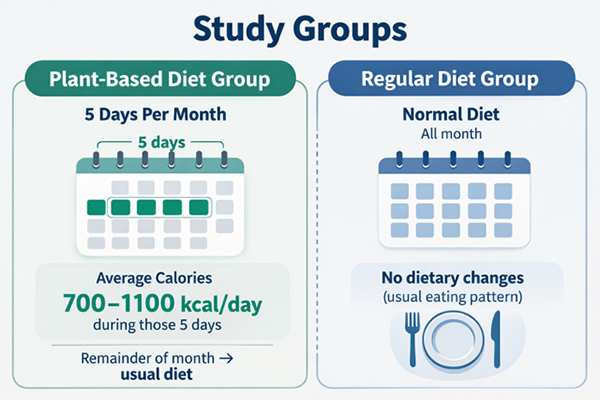
Patients in the intervention group followed a very low calorie plant based diet for 5 consecutive days each month, then returned to their usual diet for the rest of the month. This was repeated over 3 months.
The control group continued with their usual diet.
What did the study show?
The results were interesting. Around 7 out of 10 patients improved in the fasting mimicking diet group, compared with roughly 4 out of 10 in the control group. Inflammatory markers also improved, and the fasting group lost some weight.
Does this mean fasting is now a treatment for Crohn’s disease?
No. This is where context matters.
This was a relatively small study and only included people with mild to moderate Crohn’s disease. Patients with more severe or complicated disease were excluded, so these findings should not simply be applied to all Crohn’s patients.
Major gastroenterology societies are not currently recommending fasting as a standard treatment for Crohn’s disease. Any significant dietary change in IBD should be discussed with your own medical team first.
Why is this study still relevant?
What I think makes this study relevant is the biological direction it points towards.
Crohn’s disease is not only about immune inflammation. It also seems to involve a close interaction between diet, metabolism, the gut microbiome, and the immune response inside the bowel.
Short periods of calorie restriction may alter how the body handles energy and may also change the balance of bacteria living in the gut. That shift in the gut environment could be one reason why inflammation improves in selected patients.
How does this connect to the gut microbiome?
The gut microbiome is the collection of bacteria and other microorganisms living in the digestive tract. These microbes interact with the bowel lining and the immune system.
That is one reason Crohn’s diet research is becoming more interesting. A study like this suggests that dietary interventions may not just change symptoms. They may also change the environment in which inflammation is happening.
Who should be careful with this type of diet?
This type of approach may not be suitable for everyone.
Particular caution is needed in patients with:
- more severe Crohn’s disease
- significant weight loss
- poor nutritional status
- stricturing or complicated disease
If you have Crohn’s disease, please do not start a fasting style diet on your own without proper medical advice.
What is the practical takeaway?
This study does not prove that fasting is a replacement for treatment.
What it does do is reinforce an important theme in modern IBD research: the future of Crohn’s care is likely to involve much more precise thinking around diet, microbiome shifts, inflammation patterns, and treatment timing.
Recommended Guides
- Crohn’s Disease Specialist Care in Dubai
- Inflammatory Bowel Disease in Dubai
- Learn about Biologicals used in UC and Crohn’s in Dubai
- Gut Microbiome in Crohn’s and Ulcerative Colitis
- Iron Deficiency Evaluation in Dubai
Crohn’s Related VLOGs
- Stelara vs Skyrizi in Crohn’s Disease
- Vedolizumab in Crohn’s Disease: Why Timing May Change Results
- Mild Crohn’s Disease in Dubai: What New Research Means for Treatment
- Plant Based Diet and Crohn’s Disease: Latest Research Update
- Can Food Really Help Calm Crohn’s Disease?
- Is Your Gut Microbiome Behind Crohn’s Disease Flares?
- Crohn’s Treatment Dubai: AI Antibiotic and Microbiome
Biologics, Treatment Strategy, and IBD Direction
- Biological Therapy for IBD
- IBD Treatment Update 2026
- Stelara vs Skyrizi in Crohn’s Disease
- Vedolizumab in Crohn’s Disease
Diet, Microbiome, and Lifestyle Topics
- Gut Microbiome in Crohn’s and Ulcerative Colitis
- Oxygen Trap and Gut Microbiome in IBD
- What Can I Eat If I Have IBD?
- Plant Based Diet and Crohn’s Disease
- Ultra Processed Foods and Gut Microbiome
- Stress and Crohn’s and Colitis
- Vitamin D and Gut Health
- Leaky Gut and Gut Permeability
- SIBO and Gut Symptoms
- Probiotics and Digestive Health
Investigations and Procedures
If you wish to discuss this further or would like to make an appointment, please use the booking form on this page. A member of our team will contact you within 12 business hours.