
By Dr Pranab Gyawali, Consultant Gastroenterologist
Introduction
As a gastroenterologist in Dubai, I see many patients told they have mild Crohn’s disease. Often, they assume this simply means a softer version of severe Crohn’s. But new research shows this may not be the case. Mild Crohn’s may actually be biologically distinct, and this could have important consequences for how we approach treatment.
What the Latest Research Shows
Recent studies, including one from Mount Sinai in the United States (published July 2025 in Gastroenterology), have reinforced the idea that mild Crohn’s disease is not just less inflammation. It shows unique biological patterns:
- Altered sphingolipid metabolism – special fats in the gut wall process differently, making the barrier slightly “leaky.”
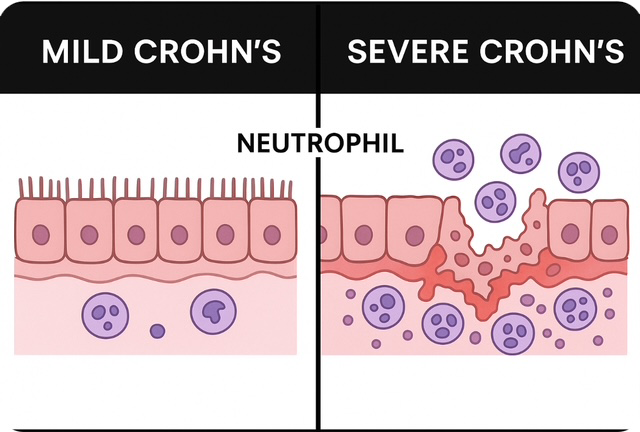
- Lower neutrophil-driven inflammation – fewer immune “first responder” cells flood in compared to severe Crohn’s, meaning less aggressive tissue damage.
This distinction highlights that mild Crohn’s disease follows its own biological pathway, not simply a weaker version of severe disease.
Why This Matters for Patients
If you’ve been diagnosed with mild Crohn’s disease, your management should reflect its unique biology. It may not always progress to severe Crohn’s, and understanding the difference can help avoid unnecessary over treatment while ensuring careful monitoring.
This opens the door to precision medicine – tailoring therapy to the type and severity of Crohn’s you have. For patients in Dubai, this means more personalized care and discussions with your gastroenterologist about the best approach.
What This Means for Patients in Dubai
At my practice, I see many patients with mild Crohn’s who want to understand what their diagnosis means. Using the latest evidence, I help guide them in making treatment choices – balancing effective control of inflammation with avoiding unnecessary heavy treatments if they aren’t required.
Every case is unique, and this new research supports the importance of individualized treatment depending on your type of Crohn’s disease.
Source: Gastroenterology (2025) — Mild Crohn’s Disease Is Associated With Altered Sphingolipid Metabolism and Reduced Neutrophilic Inflammation.
Conclusion
Mild Crohn’s disease is not simply “less severe” Crohn’s. It may be fundamentally different at the biological level. With the latest research, we can start to individualize care in new ways. If you have been told you have mild Crohn’s disease, it’s worth discussing with your gastroenterologist what this means for your treatment plan.
Dr. Pranab approach to Crohn’s treatment
FAQ Section
Q1: What does mild Crohn’s disease mean?
Mild Crohn’s disease usually means less intense symptoms and less damage on scans or endoscopy. But recent research shows it may be biologically different, not just a weaker form of severe Crohn’s.
Q2: Does mild Crohn’s disease always get worse?
Not always. Some patients with mild Crohn’s remain stable for years. Careful monitoring and personalized treatment are important.
Q3: How is mild Crohn’s disease treated in Dubai?
Treatment depends on symptoms and findings. It may involve dietary guidance, targeted medication, and regular monitoring by a gastroenterologist experienced in IBD.
Q4: Should I take strong medication if I have mild Crohn’s?
Not always. Some patients can be managed with lighter treatment. Decisions should be individualized, based on your Crohn’s type and risk factors.