
By Dr Pranab Gyawali, Consultant Gastroenterologist
August 2026 update
The first patient treated in Germany remains in drug-free clinical, biochemical, endoscopic and histological remission beyond eight months. The next question is whether that result can be repeated. Three dedicated IBD CAR-T programmes are now registered in China, including one recruiting study for ulcerative colitis.
Important: CAR-T remains experimental in inflammatory bowel disease. It is not an approved or routine treatment for ulcerative colitis or Crohn's disease.
In this video, I talk through a recent case of CAR-T therapy used in ulcerative colitis and why it has generated so much interest.
For those who want to look at the original report, you can read the journal case here: PubMed journal case report.
What exactly was reported in this case?
This was a 21-year-old patient with severe ulcerative colitis who had not responded to multiple biologics including infliximab, ustekinumab, ozanimod, vedolizumab, upadacitinib and mirikizumab.
Despite this, the disease remained active and surgery was being considered.
After CAR-T therapy, the patient went into remission within weeks and was off all medication at follow-up.
What is CAR-T therapy and how does it work?
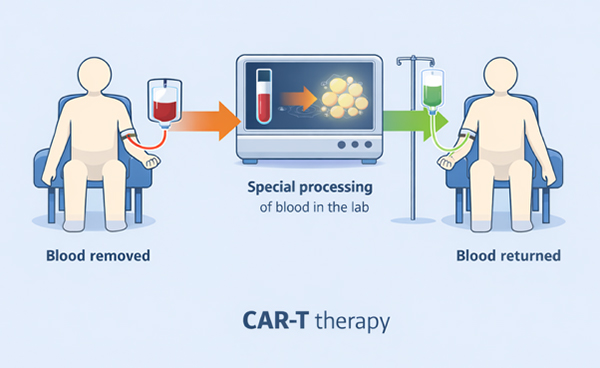
CAR-T therapy is a treatment where immune cells are taken from the blood, modified in a laboratory, and then returned to the body.
Unlike biologics, which block inflammation signals, this approach targets immune cells directly, suggesting a reset of the immune system rather than just control.
Why is this different from what we usually do?
Most treatments for ulcerative colitis, including biologics, work by blocking specific parts of the inflammatory process.
CAR-T therapy works at a deeper level by targeting immune cells themselves.
Does this mean CAR-T therapy is now a treatment option?
No.
This is a single case, and CAR-T therapy is not something we are using routinely for ulcerative colitis.
It is a complex and intensive treatment currently used mainly in cancer care and only being explored in immune conditions.
So why does this matter?
It matters because it shows what may be possible.
If this kind of response can be repeated, it suggests that in some patients, we may need to think beyond simply blocking inflammation.
It points towards a different treatment approach.
What are the limitations?
This is early data.
It is one patient.
It is not scalable in its current form.
And it carries risks that require specialist care.
What could this mean going forward?
If further studies show similar results, the real value will not be CAR-T itself.
It will be the development of simpler, safer treatments that can achieve the same kind of effect.
What next? (Part 2)
In the next video, I will talk through what happened to this patient after 8 months, based on follow-up data presented at a conference.
CAR-T Therapy in Ulcerative Colitis: Part 2 Update
This short update reviews what happened next after initial remission at eight months in the patient.
👉 Watch the Part 2 update below:
August 2026: CAR-T Moves From One UC Patient to Formal IBD Trials
The original German case was extraordinary because one young patient with severe, treatment resistant ulcerative colitis achieved a deep remission after CD19 CAR-T therapy. The follow-up presented at ECCO adds an important point. The drug-free remission was sustained for more than eight months and included symptoms, biomarkers, endoscopy and biopsies.
That remains evidence from one patient. The August development is different. Researchers are now moving from an individual case to formal IBD studies. A registered trial tells us what investigators plan to test. It does not tell us that the treatment works.
| Study and location | Planned participants | IBD group | Registry status |
|---|---|---|---|
| NCT07435779 Guangzhou |
12 | Refractory or relapsing ulcerative colitis | Recruiting |
| NCT07309744 Wuhan |
30 | Moderate to severe ulcerative colitis or Crohn's disease | Not yet recruiting |
| NCT07544160 Zhongshan |
18 | Refractory inflammatory bowel disease | Not yet recruiting |
What this table does not show: Trial registration is not evidence that CAR-T works for IBD. Results will need to be judged from treated-patient safety data, objective inflammation measures and follow-up.
Why China?
- Research scale: China has a very large CAR-T research ecosystem.
- Clinical experience: Teams have developed extensive experience in cancer and are increasingly studying CAR-T in autoimmune disease.
- Infrastructure: Specialist hospitals and cell therapy programmes provide an established base for early clinical research.
A 2026 analysis by Lai and colleagues identified 1,908 CAR-T trials globally in its source database. Of these, 1,006 were from China and 549 from the United States. This gives useful context for why early IBD programmes are appearing in China. The overwhelming majority of those 1,908 trials were not IBD trials.
For a separate discussion of CAR-Treg approaches in Crohn's disease, see CAR-T therapy and CAR-Treg research in Crohn's disease.
Part 3 video: three IBD CAR-T trials in China
In this update, I explain what the three registered studies are designed to test, why China is central to CAR-T research and why registration is only the beginning of the evidence we need.
Sources: ECCO 2026 follow-up abstract; original German case; Lai et al., Biomarker Research 2026.
CAR-T and IBD: August 2026 questions
Is CAR-T now an approved treatment for ulcerative colitis or Crohn's disease?
No. CAR-T remains experimental in IBD. It is not an approved or routine treatment for ulcerative colitis or Crohn's disease in Dubai or elsewhere.
What IBD CAR-T trials are currently registered?
Three dedicated programmes are registered in China. The Guangzhou study plans to enrol 12 people with refractory or relapsing ulcerative colitis and is recruiting. The Wuhan study plans to enrol 30 people with ulcerative colitis or Crohn's disease, and the Zhongshan study plans to enrol 18 people with refractory IBD. The latter two are not yet recruiting.
Do the Chinese trials show that CAR-T works for IBD?
No. Registration describes the planned research. It is not an efficacy result. We need treated-patient safety data, objective measures of inflammation and longer follow-up before judging whether this approach can be useful in IBD.
What are the safety concerns with CAR-T therapy?
CAR-T is an intensive treatment. Potential risks include cytokine release syndrome, neurological toxicity, infections, low blood counts and prolonged effects on antibody-producing B cells. Risks vary with the CAR-T product and treatment protocol. This is one reason IBD use belongs within specialist, regulated clinical studies.
FAQ
What exactly was reported in this CAR-T therapy ulcerative colitis case?
This was a 21-year-old patient with severe ulcerative colitis who had not responded to multiple biologics including infliximab, ustekinumab, ozanimod, vedolizumab, upadacitinib and mirikizumab. After CAR-T therapy, the patient went into remission within weeks and was off all medication at follow-up.
How is CAR-T therapy different from biologics in ulcerative colitis?
Most biologics work by blocking inflammatory signals. CAR-T therapy targets immune cells themselves, suggesting a deeper immune reset rather than simply controlling inflammation.
Is CAR-T therapy available as a routine treatment for ulcerative colitis in Dubai?
No. This is a single case report and CAR-T therapy is not currently used as a routine treatment for ulcerative colitis.
Why does this case matter for the future of ulcerative colitis treatment?
It matters because it suggests a different treatment direction. If similar responses are reproduced, future therapies may become simpler and safer while aiming to achieve the same kind of deeper immune reset.
Is CAR-T now an approved treatment for ulcerative colitis or Crohn's disease?
No. CAR-T remains experimental in IBD. It is not an approved or routine treatment for ulcerative colitis or Crohn's disease in Dubai or elsewhere.
What IBD CAR-T trials are currently registered?
Three dedicated programmes are registered in China. The Guangzhou study plans to enrol 12 people with refractory or relapsing ulcerative colitis and is recruiting. The Wuhan study plans to enrol 30 people with ulcerative colitis or Crohn's disease, and the Zhongshan study plans to enrol 18 people with refractory IBD. The latter two are not yet recruiting.
Do the Chinese trials show that CAR-T works for IBD?
No. Registration describes the planned research. It is not an efficacy result. We need treated-patient safety data, objective measures of inflammation and longer follow-up before judging whether this approach can be useful in IBD.
What are the safety concerns with CAR-T therapy?
CAR-T is an intensive treatment. Potential risks include cytokine release syndrome, neurological toxicity, infections, low blood counts and prolonged effects on antibody-producing B cells. Risks vary with the CAR-T product and treatment protocol. This is one reason IBD use belongs within specialist, regulated clinical studies.
Recommended Guides
Ulcerative Colitis Basics & Patient Education
- Engineered Probiotic for Ulcerative Colitis 2026
- Gut Microbiome in Crohn’s Disease & Ulcerative Colitis
- Stelara vs Skyrizi Crohn’s Study Explained
- Ulcerative Colitis Progression in Dubai: What the Research Shows + 3 Ways to Reduce Risk
- Don’t Ignore Your 5-ASA — Proven Treatment for Ulcerative Colitis
- Probiotics for Ulcerative Colitis: What Actually Works?
- JFK Had Ulcerative Colitis — Why You’re Not Alone
- Can Ayurvedic Medicine Help Ulcerative Colitis?
- Predicting Vedolizumab Response Early in IBD
Biologics / Treatment section
- Predicting Biologic Treatment Success in Crohn’s & Ulcerative Colitis
- Learn about Biologicals used in UC and Crohn’s in Dubai
- Biologics and Pregnancy
- Tremfya (Guselkumab) in Ulcerative Colitis: Does It Keep Patients Well Long Term?
Ulcerative Colitis Diet, Lifestyle & Flare Control
- Ulcerative Colitis Diet: 3 Gut-Friendly Foods That Help Control Flares
- Can Coconut Oil Help with Ulcerative Colitis?
- Curcumin & Qing Dai in Ulcerative Colitis — What You Should Know
- Stress and Colitis — Why the Gut–Brain Connection Matters
Gut Microbiome, Leaky Gut & Overlooked Issues
- Diet, microbiome and biologic response in ulcerative colitis
- How the Oxygen Trap May Be Driving Your IBD — And Why Diet Still Matters
- New Test for Diagnosing Crohn’s & Colitis: Microbiome-Based IBD Diagnosis
- Leaky Gut in IBD — What It Really Means
- IBD Breakthrough: How Gut Bacteria Unlock Natural Anti-Inflammatories
- SIBO in IBD — The Overlooked Issue You Shouldn't Ignore
Nutritional Deficiencies & Complications in IBD
Related Gastroenterology Topics
Digestive Conditions
- Gut Microbiome Test
- Irritable Bowel Syndrome (IBS)
- Crohn’s Disease
- Acid Reflux Treatment
- Gastritis
- H- Pylori Treatment
- Abdominal Pain
- Bloating
- Constipation
- Fatty Liver
- Rectal Bleeding
- Functional Dyspepsia
- Eosinophilic Esophagitis
- Food Intolerances
- Hemorrhoids
Diagnostic Tests & Procedures
- Hydrogen & Methane Breath Test (SIBO)
- Capsule Endoscopy
- Gastroscopy
- Colonoscopy
- CT Abdomen / CT Enterography
- MRI Abdomen / MR Enterography
- Urea Breath Test
- Fecal H. pylori Antigen
If you wish to discuss this further or would like to make an appointment, please use the booking form on this page. Expect a response within 12 business hours.