
By Dr Pranab Gyawali, Consultant Gastroenterologist
Three questions come up repeatedly in Dubai:
- Is vaping safe for my gut?
- Does vaping affect gut health and gut sensitivity?
- And if I have Crohn’s disease – is vaping better than smoking?
Vaping is extremely common across the UAE, especially among adults transitioning away from cigarettes. But the gut behaves differently from the lungs, and we are now learning more about how vape chemicals interact with the gut lining, tight junctions and intestinal inflammation.
This VLOG is designed for both:
- Anyone focused on improving their gut health, even without inflammatory bowel disease
- Patients with Crohn’s disease or ulcerative colitis, who want clear, evidence-based guidance
Watch: Is Vaping Safe for Your Gut?
Is Vaping Safe for Your Gut? The Gut Lining, Tight Junctions & Inflammation Explained
How Vaping Interacts with the Gut Lining
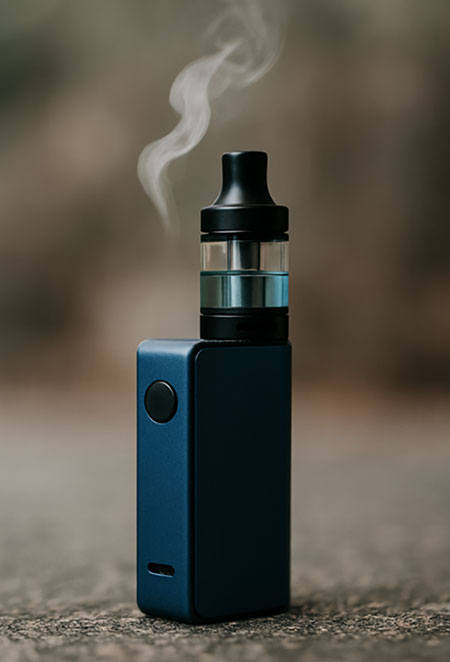
Vaping avoids many of the harmful by-products of burning tobacco, but the aerosol still contains dozens of biologically active compounds. Newer research shows these compounds do not remain in the lungs – they circulate systemically, including to the intestinal epithelium.
For people interested in gut health, this matters because anything that repeatedly irritates or stresses the gut lining can increase sensitivity, symptoms and the risk of inflammation over time.
What Happens to the Gut Barrier?
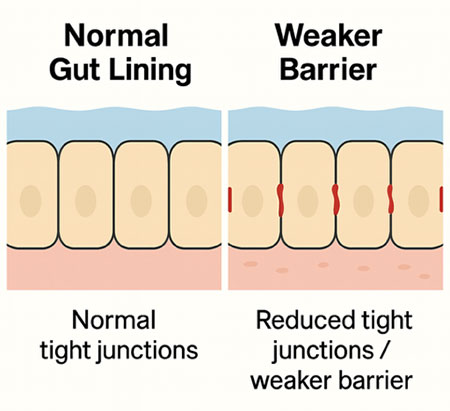
The gut barrier is held together by microscopic “seals” between cells called tight junctions. These tight junctions help keep the gut wall selectively permeable – allowing nutrients through while keeping irritants, toxins and bacteria out.
Laboratory and animal studies suggest that exposure to vape aerosols can:
- Weaken tight junction proteins
- Increase intestinal permeability (a “leakier” gut barrier)
- Make the barrier more sensitive to irritation
- Increase susceptibility to inflammation
For general gut-health patients, this may contribute to:
- Bloating and abdominal discomfort
- Fluctuating bowel habits
- Increased sensitivity to trigger foods
- Slower recovery after gut infections or periods of stress
What Does This Mean for Crohn’s Disease?
People with Crohn’s disease already have a more vulnerable gut barrier and a tendency towards intestinal inflammation. Any additional weakening of the tight junctions – even mild – can become clinically relevant.
This does not prove that vaping directly causes Crohn’s flares. However, it does add a biologically plausible mechanism by which vaping could:
- Delay mucosal healing
- Increase the risk of subclinical inflammation
- Worsen symptom variability
- Reduce overall gut resilience
Is Vaping Better Than Smoking for Crohn’s?
Yes – absolutely. Smoking is clearly associated with worse Crohn’s outcomes, including strictures, higher flare rates, recurrence after surgery and poorer response to biologic therapy.
Vaping is often a step forward compared to smoking, especially as a harm-reduction measure. But for long-term Crohn’s stability, the goal should be to reduce and eventually eliminate both smoking and vaping, giving the gut lining the best chance to heal.
Q&A for Gut-Health & Crohn’s Patients in Dubai
1. Does vaping irritate the gut even without nicotine?
Yes. Many flavouring chemicals used in e-liquids show barrier-weakening effects in laboratory models, even when nicotine is not present. The gut lining can still be exposed to aldehydes and other compounds when you vape.
2. Are disposable vapes worse for the gut?
Some recent studies show that certain disposable vapes can emit higher levels of toxic metals (such as nickel, lead and antimony) compared with some older or refillable devices. This raises concern that disposables may pose extra risk to the gut barrier, but we do not yet have human studies directly proving more gut irritation from disposables.
3. How long does gut-barrier healing take after quitting vaping?
Animal studies suggest that early recovery of the gut lining can begin within about four weeks after stopping e-cigarette exposure. In humans, improvements in the gut microbiome have been documented within 4–8 weeks after quitting smoking.
However, we do not yet have definitive human data on the exact timeline for tight-junction recovery after quitting vaping. It is reasonable to say that recovery likely begins within weeks, but the speed and completeness of healing will vary between individuals.
4. Can vaping worsen bloating, loose stools or gut sensitivity?
Yes, it can. By mildly irritating the epithelial lining and increasing permeability, vaping may contribute to bloating, loose stools or a sense of “irritable” gut, especially in people who already have digestive issues.
5. Does vaping affect the gut microbiome?
Early research suggests that vaping may alter the balance of gut bacteria, but human data are still limited. Changes in the microbiome can, over time, influence inflammation, metabolism and overall gut health.
Frequently Asked Questions (Summary)
Is vaping safe for gut health?
Vaping is safer than smoking, but it is not neutral for the gut. Experimental studies show that vape aerosols can weaken tight junctions and affect the gut barrier.
Can vaping trigger Crohn’s flares?
We do not have direct proof that vaping triggers Crohn’s flares. However, because it can weaken the barrier and increase irritation, it may make flares more biologically likely in people who are already susceptible.
Is non-nicotine vaping safer?
Not necessarily. Flavouring aldehydes and other components can still affect the gut lining, even without nicotine.
Does vaping help reduce the Crohn’s risks of smoking?
Yes. Moving from smoking to vaping generally reduces overall risk, especially for the lungs and cardiovascular system. However, for Crohn’s and long-term gut health, stopping both smoking and vaping is the optimal target.
Recommended Guides
- Crohn’s Disease in Dubai
- Ulcerative Colitis in Dubai
- Learn about Biologicals used in UC and Crohn’s in Dubai
- Iron Deficiency in IBD
- Diet & Microbiome in IBD
- Top Leaky-Gut Supplements – Rated by a Gut Doctor
Lifestyle & Gut Health Factors (Dubai)
- Ultra-Processed Foods & Gut Microbiome
- Stress & the Gut–Brain Axis
- Poor Sleep & Gut Health
- Vitamin D & Gut Health
- Fast Food & Gut Microbiome
Related Gastroenterology Topics
- Bloating – common in gut sensitivity and IBD, often worsened by barrier disruption.
- Irritable Bowel Syndrome (IBS) – overlaps with gut sensitivity and fluctuating bowel habits.
- Gastritis – upper gut inflammation that can mimic some vaping-related symptoms.
- Diarrhea – influenced by mucosal inflammation and barrier integrity.
- Celiac Disease – another condition driven by gut barrier and immune activation.
- Fatty Liver Disease – linked to metabolic inflammation and lifestyle.
Investigations & Procedures
- Capsule Endoscopy – important for assessing small-bowel Crohn’s disease.
- Hydrogen & Methane Breath Test (SIBO) – useful in patients with bloating and overlapping IBS-type symptoms.
- Gut Microbiome Test – helps evaluate microbial imbalance in gut-health and IBD patients.
- Gastroscopy
- Colonoscopy
- Diagnostic Tests for Gastrointestinal Disorders
If you wish to discuss this further or would like to make an appointment, please use the booking form on this page. A member of our team will contact you within 12 business hours.