
Published: 15 July 2026
Written and medically reviewed by: Dr Pranab Gyawali, UK-trained Consultant Gastroenterologist
Short answer
You do not need to automatically stop all red meat because you have Crohn's disease or ulcerative colitis. But I would be cautious with frequent red meat, and more cautious with processed meat such as sausages, bacon, salami or processed burgers.
Recent IBD diet research has given red meat, especially processed meat, some bad press. This new mouse study does not prove that red meat causes human flares, but beef protein worsened experimental colitis more than pea protein once colitis had been triggered.
The practical answer is to think about amount, frequency, processing, tolerated fibre and whether your inflammation is controlled. Diet advice in IBD must be individualised, so discuss major changes with your IBD team.
Watch the VLOG
In this short VLOG, I go through the new beef protein versus pea protein study, why the microbiome experiment matters, and why the psyllium fibre finding changes the way I think about red meat in IBD.
What did the new red meat study find?
Researchers tested synthetic mouse diets containing different isolated protein sources: beef, pea, soy, egg white and casein. You can read the study here: Dietary Protein Source Mediates Colitis Pathogenesis Through Bacterial Modulation of Bile Acids.
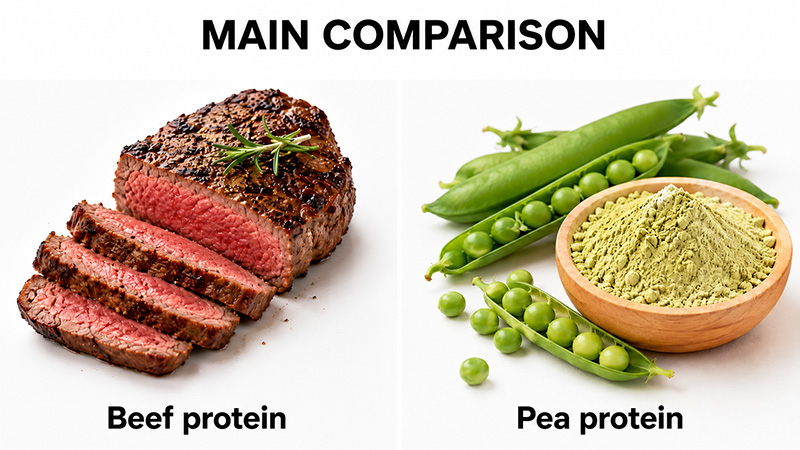
The clearest patient-facing comparison was beef protein versus pea protein. Mice fed beef protein developed the most severe experimental colitis. Mice fed pea protein developed milder inflammation.
Can red meat trigger Crohn's or ulcerative colitis flares?
There is no proof that red meat directly triggers a flare in every person with Crohn's disease or ulcerative colitis. But red meat and processed meat have been associated with IBD concerns in several ways.
That matters, because patients often want a yes-or-no answer: "Can I eat steak?" "Should I avoid burgers?" "Is red meat causing my bleeding or diarrhoea?" In real life, the answer depends on the person, the disease pattern, whether there is active inflammation, the amount eaten, and the rest of the diet.
But I would not dismiss the question. In previous VLOGs, red meat and processed meat have repeatedly appeared in the background of IBD diet concerns: heavier meat intake has been linked with higher ulcerative colitis relapse risk in observational research, as discussed in my VLOG on diet, calprotectin and flare prediction in Crohn's and ulcerative colitis; red and processed meat were removed in the whole-food IBD diet intervention I discussed in my recent VLOG comparing a whole-food diet with enteral nutrition; ultra-processed dietary patterns may matter more than single foods; and high-meat, low-fibre patterns raise concern about bile acids, gut bacteria and loss of fibre-supported microbial metabolism.
The new study adds a possible mechanism. Beef protein did not create colitis by itself. The mice still needed colitis to be triggered separately. But once colitis was triggered, the beef-protein diet worsened inflammation more than the pea-protein diet.
How was the microbiome involved?
Yes. This was one of the most important findings.
The researchers fed healthy donor mice either beef protein or pea protein. Then they transferred the donor gut bacteria into germ-free mice. When colitis was later triggered, the mice that received bacteria from beef-protein-fed donors developed worse inflammation.
So the beef-protein diet appeared to reshape the gut bacteria in a way that transferred greater vulnerability to colitis.
This does not mean "beef bacteria" infected the recipients. It does not mean the recipient mice developed spontaneous colitis. It means the microbiome seemed to mediate part of the effect.
How might red meat affect gut bacteria, bile acids and the mucus barrier?
With beef protein feeding, the researchers reported increased Akkermansia muciniphila, reduced Lactobacillus johnsonii and Turicibacter sanguinis, altered bile acids, and a thinner, poorer-quality mucus barrier.
I would be careful here. This does not mean Akkermansia is simply harmful. My recent Akkermansia VLOG made the same point: a bacterium can behave differently depending on diet, surrounding microbes and the condition of the mucus barrier.
The better patient message is that beef protein seemed to change an ecosystem: bacteria, bile acids and mucus protection together.
Did fibre reduce the inflammation?
Yes, in the mouse experiment. This was the most useful twist.
The researchers kept beef protein in the diet but changed the fibre source from cellulose to psyllium. Inflammation reduced. Bile-acid-modifying bacteria were restored, and the bile-acid pattern shifted in a more favourable direction.
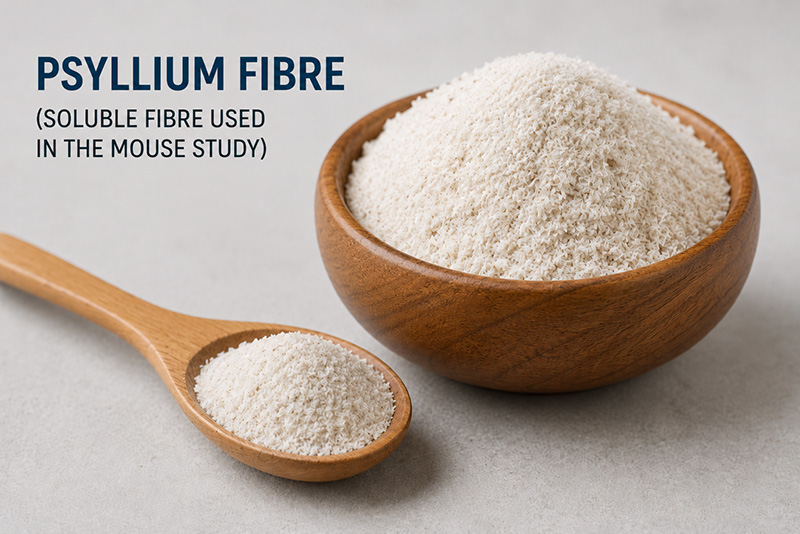
This does not mean psyllium cancels out steak. It does not mean every person with IBD should take psyllium with red meat.
It does suggest that the fibre environment may change what gut bacteria do with the diet they are given.
Should I take psyllium if I eat red meat?
Not on the basis of this study alone.
Psyllium may help some patients in some situations, but fibre advice in IBD has to be individualised. Extra fibre can be unsuitable if you have stricturing Crohn's disease, obstructive symptoms, severe active inflammation, marked bloating, vomiting, cramping after meals, or postoperative dietary restrictions.
If you have been told to follow a low-residue or low-fibre diet, do not use this study as a reason to add psyllium without speaking to your IBD team.
Is processed meat different from unprocessed red meat?
Usually, I am more concerned about processed meat than occasional unprocessed red meat.
Processed meat often comes with a wider dietary pattern: additives, high salt, low fibre, fewer plant foods, and sometimes an ultra-processed food context. This study tested isolated beef protein, not bacon, sausages or processed meat products. So we should not pretend it answered every processed-meat question.
But for a patient asking what to do tomorrow, I would usually start with frequency and processing. Daily processed meat is a different question from occasional unprocessed red meat. A meat-heavy, low-fibre pattern is different from a diverse diet with tolerated plant foods. Symptoms after a meal are not the same as proven inflammatory relapse.
What is the practical plate message?
If you enjoy red meat, the question is not only whether you eat it. It is also what comes with it.
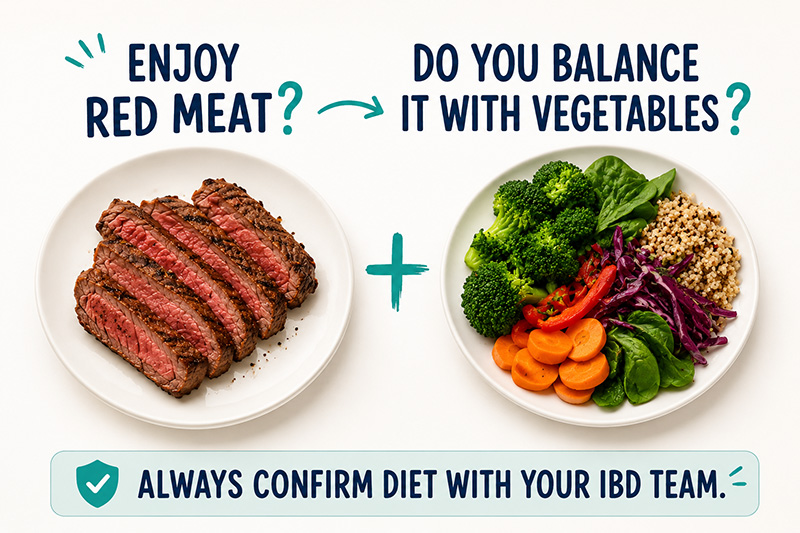
For many patients, I would think about how often red meat is eaten, whether it is processed, whether the overall diet contains tolerated fibre, whether there is enough dietary variety, and whether inflammation is objectively controlled with calprotectin, imaging, intestinal ultrasound or endoscopy when needed.
Diet should not replace IBD treatment or monitoring. It should sit alongside proper assessment of inflammation.
My current view
This study does not prove that red meat is harmless. It also does not prove that every patient must avoid red meat.
What it does well is explain why food effects are not always about one ingredient in isolation. Beef protein worsened experimental colitis in mice. The microbiome seemed to carry part of that effect. Changing the fibre environment changed the inflammatory outcome.
That is the message I would take to clinic: amount, frequency, processing, fibre tolerance, microbiome context and objective inflammation all matter.
Frequently asked questions
Can I eat steak if I have Crohn's disease?
Some people with Crohn's disease tolerate occasional unprocessed red meat. This study does not prove that steak triggers Crohn's flares in humans. But if your diet is meat-heavy, low in tolerated fibre, or your inflammation is active, it is worth discussing the pattern with your IBD team.
Can I eat red meat with ulcerative colitis?
There is no universal ban, but heavier meat intake has been linked with higher relapse risk in some ulcerative colitis research. The key is not only the food itself, but frequency, processing, the rest of the diet and whether inflammation is controlled.
Is processed meat worse for IBD?
Processed meat is usually a bigger concern than occasional unprocessed red meat because it often sits within a more ultra-processed, lower-fibre dietary pattern. This mouse study tested beef protein, not processed meat products, so the distinction should be kept clear.
Does fibre protect against red meat in IBD?
This mouse study found that psyllium reduced beef-protein-associated inflammation, but it does not prove protection in humans. Fibre may help shape the microbiome, but fibre advice must be individualised in Crohn's disease and ulcerative colitis.
Is Akkermansia good or bad?
It is not that simple. Akkermansia muciniphila can behave differently depending on diet, surrounding microbes and the mucus barrier. In this study it increased as part of a wider ecosystem change with altered bile acids and mucus protection.
Should symptoms after red meat be treated as a flare?
Not automatically. Symptoms after food can reflect intolerance, IBS overlap, bile acid diarrhoea, strictures, infection or active inflammation. If symptoms persist or inflammatory markers rise, they need proper assessment.
Related VLOGs, guides and useful pages
Recent VLOGs that led into this topic
- Bread, ultra-processed grains and IBD
- Before you take another probiotic: what Akkermansia teaches us
- Diet, calprotectin and flare prediction in Crohn's and ulcerative colitis
- High calprotectin but normal CRP
- Predicting severe Crohn's and ulcerative colitis earlier
Main IBD authority pages
- Inflammatory bowel disease
- Crohn's disease
- Ulcerative colitis
- Crohn's and ulcerative colitis VLOG hub
- Biologics for IBD
Diet, microbiome and gut barrier pages
- Gut microbiome in Crohn's disease and ulcerative colitis
- Diet, microbiome and IBD
- General gut microbiome page
- Ultra-processed foods and gut microbiome health
- Gut barrier support in Crohn's and UC
Nutrition, deficiency and monitoring context
This article is for general education and should not replace personal medical advice. If you have Crohn's disease or ulcerative colitis, discuss major diet changes, fibre supplements and persistent symptoms with your own gastroenterology team.