
2026 Update from a UK-trained gastroenterologist in Dubai.
If you have Crohn’s disease or ulcerative colitis and you are worried about bread, please do not feel bad about asking this question. I hear it often in clinic. Many patients tell me they have stopped bread completely because they are worried it may worsen inflammation or trigger a flare.
As a consultant gastroenterologist looking after patients with Crohn’s disease and ulcerative colitis, my aim is not to make people more frightened of food. It is to help separate sensible caution from unnecessary restriction.
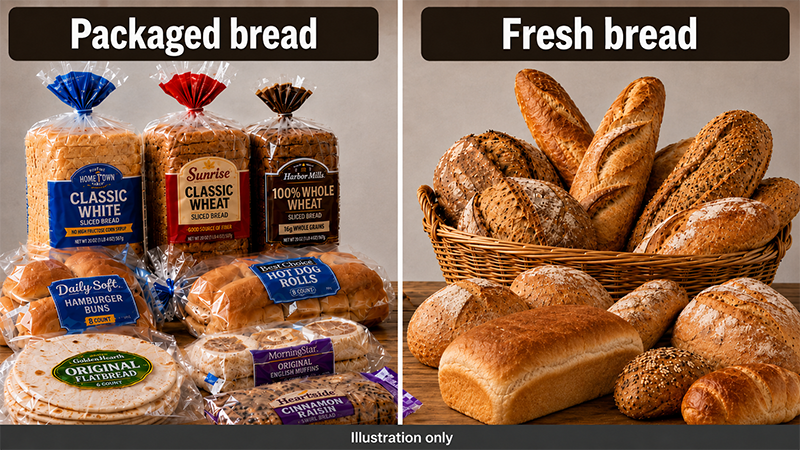
The short answer is this: bread itself has not been shown to cause Crohn’s disease or ulcerative colitis. A large international observational study found that higher intake of ultra-processed grain foods was associated with a higher incidence of inflammatory bowel disease , while fresh bread and rice were associated with a lower incidence.
That does not prove cause and effect. It also does not show that avoiding packaged bread treats established Crohn’s disease or ulcerative colitis. But research like this helps us think more carefully about the difference between bread as a food and heavily processed grain products.
If you prefer to watch the short video first, you can watch it here:
Why are so many patients frightened of bread?
There is a lot of diet advice on social media. Some of it suggests that gluten, carbohydrates, grains or bread are automatically inflammatory. If you already live with Crohn’s disease or ulcerative colitis, it is understandable that this can make you anxious about ordinary foods.
Symptoms can add to the confusion. During a flare, or when the bowel is sensitive, a food may worsen bloating, urgency, diarrhoea or cramps. That does not always mean the food is causing bowel inflammation.
Food-related symptoms, active inflammation, stricturing Crohn’s disease, poor nutrition and general long-term diet quality are related but different issues. This is why a simple rule such as “avoid bread" is rarely good enough.
What did the PURE study investigate?
The study discussed in this article came from the Prospective Urban Rural Epidemiology, or PURE, cohort. It included more than 124,000 people from 21 countries and followed them over many years.
The researchers looked at whether ultra-processed grain foods were linked with the later development of inflammatory bowel disease.
This is important because it moves the question away from “Are all grains bad?" and towards a more useful question: “Does the way grain foods are processed matter?"
It is also important to be clear about what the study did not do. It did not test whether removing packaged bread improves symptoms, heals inflammation or prevents flares in people who already have Crohn’s disease or ulcerative colitis.
What were ultra-processed grain foods?
Ultra-processed grain foods generally means industrially processed grain-based products rather than simple grain staples. In patient terms, this may include products such as packaged breads, processed or sweetened breakfast cereals and pastries.
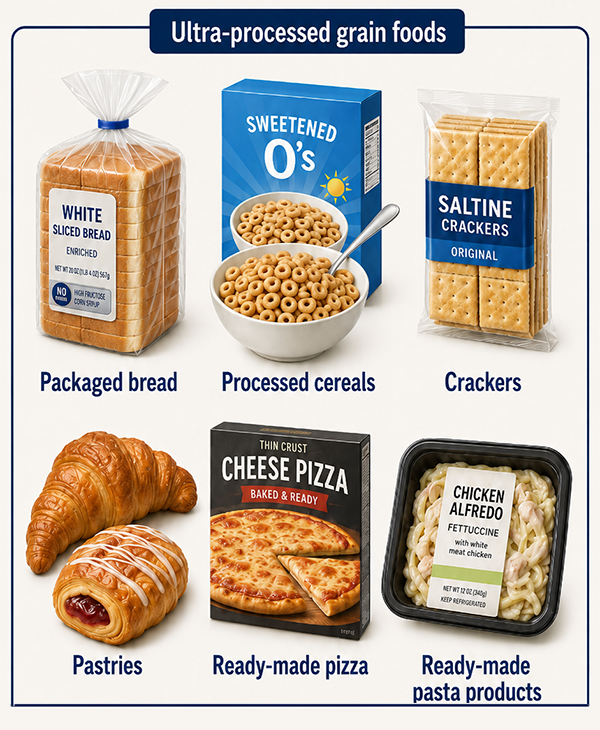
The reported association applies to the overall ultra-processed grain category. The paper does not establish that each illustrated product carried an independent risk.
How large was the increase in IBD risk?
In the study, the highest ultra-processed grain intake category was at least 19 grams per day. The lowest category was less than 9 grams per day.
Compared with the lowest intake group, the highest intake group had an adjusted hazard ratio of 1.86 for developing IBD. In plain English, that is an 86% higher relative risk, or roughly close to twice the risk.
This should be taken seriously, but not overinterpreted. Observational studies can show links, but they cannot prove that one food category caused the disease.
Why did fresh bread and rice matter?
One of the most useful parts of the study is that not all grain foods moved in the same direction. Fresh bread and rice were associated with a lower incidence of IBD.
This is why the message should not become “bread is bad" or “carbohydrates are inflammatory." The paper did not prove that fresh bread prevents IBD. It also did not define the fresh bread category precisely enough for us to say that it means sourdough, wholegrain, artisan bread, bakery bread or any other specific subtype.
The safer interpretation is that simpler, less industrially processed grain foods may behave differently from ultra-processed grain products.
Does this mean packaged bread causes IBD?
No. This was an observational study, so the correct language is “associated with" or “linked with."
People who eat more ultra-processed foods may differ in many other ways, including overall diet quality, fibre intake, additives, food structure, lifestyle, income, environment and gut microbiome exposures. Researchers adjust for many factors, but adjustment can never remove every possible explanation.
The finding is still useful because it fits a broader pattern in nutrition research: ultra-processed foods may not affect the body in the same way as simpler foods made from similar ingredients.
Should people with Crohn’s or colitis stop eating bread?
Not automatically.
If you already have Crohn’s disease or ulcerative colitis, this study does not prove that stopping packaged bread will treat your disease. It also does not mean that every patient should avoid bread, rice, pasta or carbohydrates.
A more practical approach is to look at the pattern of your diet. For general dietary quality, it may be reasonable to favour simpler, less heavily processed foods where they are tolerated. However, this study does not show that making this change will control inflammation or prevent flares in someone who already has IBD.
But this should not become another rigid food rule that makes people afraid to eat.
What if I am having an active flare?
During a flare, diet advice can be very different from general healthy eating advice.
Some people with active inflammation, severe diarrhoea, weight loss or poor nutrition need temporary diet changes. Patients with narrowing or stricturing Crohn’s disease may need specific advice about fibre texture, skins, seeds or bulky foods. Some people may need nutritional drinks, dietitian support or medical treatment escalation rather than more restriction.
This is why a broad research finding about future IBD risk should not be turned into a one-size-fits-all instruction for someone currently unwell.
If you are flaring, losing weight, struggling to eat or worried about obstruction symptoms, discuss diet changes with your gastroenterology team.
Dr Pranab’s current view
This is not evidence that bread or carbohydrates are harmful to everyone with IBD. It is a clue that the way grain foods are processed may matter.
The finding is important because it shifts the question away from simply asking whether bread is good or bad and towards asking what has been done to the food.
However, this was an observational study. We still do not know which aspect of ultra-processing – food structure, additives, refining, dietary displacement or another factor – may be responsible.
My practical message is not to fear bread as a category. Instead, think carefully about the difference between simple staple foods and heavily processed grain products, and individualise your diet around your disease state, symptoms and nutritional needs.
Key takeaways
- Bread itself has not been shown to cause Crohn’s disease or ulcerative colitis.
- Higher ultra-processed grain intake was associated with higher future IBD risk in a large observational study.
- Fresh bread and rice were associated with lower IBD incidence, but this does not prove they prevent IBD.
- The study looked at developing IBD, not treating established Crohn’s disease or ulcerative colitis.
- During a flare, diet may need to be individualised, especially with strictures, weight loss, diarrhoea or poor nutrition.
Frequently asked questions
Can I eat bread if I have Crohn’s disease?
Many people with Crohn’s disease can eat bread, especially when they are well and do not have strictures or obstruction risk. During a flare or with narrowing, individual advice may be needed.
Can I eat bread if I have ulcerative colitis?
Bread is not automatically forbidden in ulcerative colitis. If it worsens symptoms, the reason may be tolerance, fibre, additives, portion size or the flare itself rather than bread directly causing inflammation.
Is fresh bread safer than packaged bread?
The study found that fresh bread was associated with lower IBD incidence, while ultra-processed grain foods were associated with higher incidence. This does not prove that fresh bread prevents IBD or that packaged bread causes IBD.
Should I avoid gluten because I have IBD?
Not unless you have coeliac disease, wheat allergy or a clear individual reason to avoid it. Some people feel better with less wheat, but IBD itself does not automatically require a gluten-free diet.
What is the main message from this study?
The main message is that the degree of food processing may matter. The study should reduce fear of all bread and carbohydrates, not increase it.
Research used in this article
The main research discussed here is the PURE cohort analysis, Ultraprocessed Grains and Risk of Inflammatory Bowel Disease.
This article is for general education and should not replace personal medical advice. If you have Crohn’s disease or ulcerative colitis and are considering major diet restriction, especially during a flare, please discuss this with your own gastroenterology team. You can also see more related videos in the Crohn’s and ulcerative colitis VLOG hub.