
By Dr. Pranab Gyawali – Consultant Gastroenterologist (UK-trained), Dubai
Introduction
If you’re thinking about gut health—whether you live with Crohn’s disease, ulcerative colitis, irritable bowel syndrome (IBS) or general gut sensitivity—understanding the impact of food additives is important. One of the most widely used emulsifiers is Carboxymethylcellulose (CMC), and we now have a controlled human study showing how it affects the gut.
Below is a quick video summary for those who prefer to watch. A more detailed explanation continues underneath.
Watch: What CMC Does to Your Gut (1 min 42 sec)
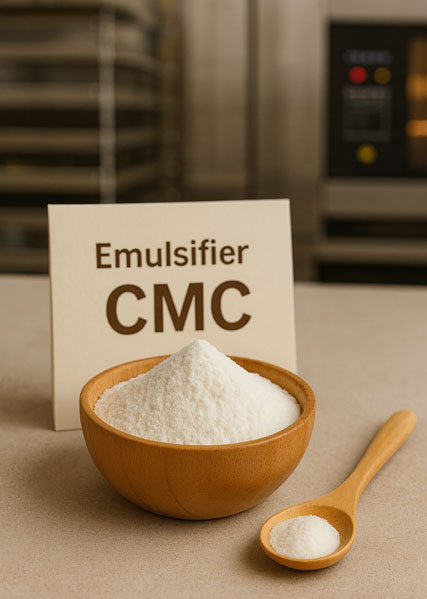
What Is Emulsifier CMC?
Carboxymethylcellulose (CMC), also known as E466, is a synthetic food emulsifier added to products to improve texture, smoothness and shelf stability. It is commonly found in:
- Ice creams and frozen desserts
- Packaged sauces and salad dressings
- Chocolate milk and flavoured dairy drinks
- Instant noodles and some soup mixes
- Gluten-free baked goods
- Ready meals and creamy frozen dishes
The First Human Trial: How CMC Was Tested
Until recently, most emulsifier research came from animal models and laboratory work. This study is one of the first controlled human feeding trials on CMC.
Healthy adults were admitted to a research facility where all meals were prepared for them. They were divided into two groups:
- CMC group – meals contained CMC
- Control group – identical meals without CMC
The intervention lasted 11 days, with calories, environment and activity closely controlled. This allowed researchers to isolate the effect of CMC itself.
Key Findings From the Study
Even in healthy individuals, 11 days of CMC consumption led to:
- Increased gut discomfort and bloating
- Altered microbiota composition, with fewer beneficial bacteria
- Bacterial encroachment closer to the gut lining
- Thinning of the mucus barrier that normally protects the intestine
- Early inflammatory changes in one participant’s biopsies
These findings raise valid concerns for people with inflammatory bowel disease (IBD), where the gut barrier and microbiome are already sensitive.
Read the full human trial on carboxymethylcellulose here.
Why This Matters for Gut Health in Dubai
Dubai’s multicultural food environment means residents have access to a wide range of international packaged foods—many of which contain emulsifiers like CMC. While this study was small, it provides important early clues about how these additives may influence:
- The balance of the gut microbiome
- The integrity of the intestinal mucus barrier
- Symptoms such as bloating, sensitivity and inflammation
This is also one of the reasons why I focus heavily on dietary patterns in IBD management, alongside biologics, immunomodulators and 5-ASA medicines.
Recommended Guides
- Crohn’s Disease Treatment in Dubai
- Ulcerative Colitis Treatment in Dubai
- IBD Diet & Lifestyle Guide
- Gut Microbiome Test in Dubai
- IBS Treatment in Dubai
- Hydrogen & Methane Breath Test for SIBO
- Bloating Treatment in Dubai
Gut Health VLOG Series
- Ultra-Processed Foods & the Gut Microbiome
- Diet & the Microbiome in IBD
- Serotonin & Gut Health
- Stress & the Gut–Brain Axis
- Vitamin D & Gut Health
- Yogurt & Gut Health
- Mold & the Gut
- Eating Fast & Gut Motility
- Morning Coffee & the Gut
- Bland Diets & Gut Healing
- Sleep & Gut Health
Related Gastroenterology Topics
- SIBO – bacterial overgrowth affecting digestion and sensitivity.
- GERD – reflux symptoms influenced by diet and motility.
- Constipation – motility, fibre and lifestyle factors.
- Diarrhoea Evaluation – identifying triggers and inflammation.
- Food Intolerances – the role of lactose, FODMAPs and additives.
Investigations & Procedures
- Colonoscopy
- Gastroscopy (Upper Endoscopy)
- Capsule Endoscopy
- Iron Deficiency Work-up
- MRI / MR Enterography for IBD
If you wish to discuss this further or would like to make an appointment, please use the booking form on this page. A member of our team will contact you within 12 business hours.