
Constipation care in Dubai
Published :
If you strain repeatedly, feel blocked or still feel that you have not emptied properly, the problem may involve the way the pelvic floor muscles coordinate during a bowel movement. Constipation biofeedback is a structured retraining programme for selected patients with this type of evacuation problem.
Treatment is provided in a JCI accredited centre in Dubai by a trained pelvic floor physiotherapist with experience in biofeedback, under the clinical supervision of consultant gastroenterologist Dr Pranab Gyawali.
 WhatsApp the Admin Team
Quick answers
Who may benefit?
Patients with suspected or confirmed pelvic floor dyssynergia or another evacuation disorder.
Is an assessment required?
Yes. Constipation has different causes, so suitability must be assessed before the programme begins.
How many sessions are provided?
Usually four to six sessions, adjusted according to the patient’s needs and progress.
How long is the first session?
The first session can take up to 45 minutes. Later sessions are shorter and build on what has already been learned.
How is feedback provided?
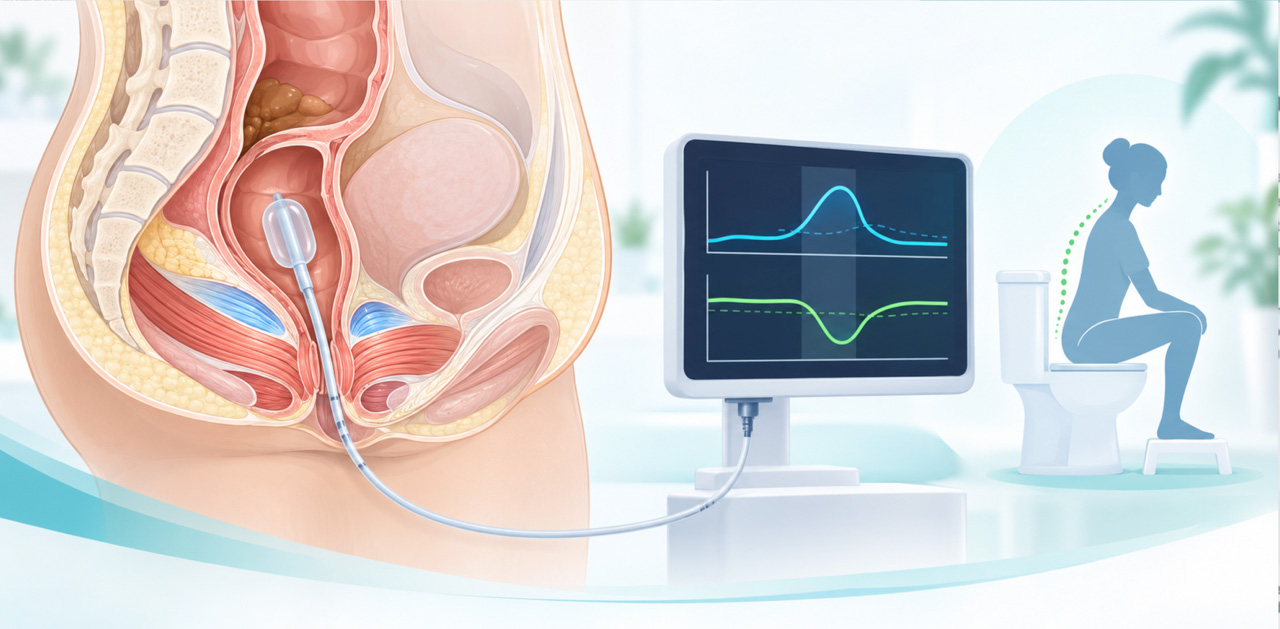
A slim pressure sensing catheter provides visual feedback on a screen while bowel emptying techniques are practised.
Can insurance cover it?
Coverage varies by policy and may require approval. The clinic coordinator can check this for each patient.
How does the feedback help?
Is biofeedback right for my constipation?
Biofeedback is intended for a particular type of constipation. It can help when the muscles around the back passage tighten, or do not relax properly, while you are trying to empty your bowels.
Symptoms that may suggest an evacuation problem include persistent straining, a blocked sensation, incomplete emptying, long periods on the toilet or the need to use your fingers to help empty the bowel.
Does everyone with constipation need it?
No. Constipation may instead be related to slow movement through the colon, medication, diet, irritable bowel syndrome or another medical problem. This is why assessment comes first.
Biofeedback should be recommended when the symptoms and examination or testing indicate that impaired pelvic floor coordination is contributing to the problem.
What happens before treatment starts?
Dr Pranab first reviews the pattern of constipation, previous treatment and any warning symptoms. A clinical examination and tests such as anorectal manometry, balloon expulsion testing, a colonic transit study or MRI defecography may be considered when they are likely to change treatment. Not every patient needs every test.
The important question is whether the bowel is moving slowly, whether emptying is being obstructed by poor pelvic floor coordination, or whether both problems are present. The treatment plan depends on that distinction.
What happens during the biofeedback programme?
The first session
The physiotherapist explains how normal bowel emptying works and reviews toilet posture, breathing and the way the abdominal and pelvic floor muscles should work together. This session can take up to 45 minutes.
Visual pressure feedback
A slim catheter records pressure changes from the rectum and anal canal. The screen allows the patient and physiotherapist to see whether an abdominal push is being accompanied by relaxation of the pelvic floor.
Practising coordinated emptying
The physiotherapist helps the patient practise an effective abdominal push while relaxing the anal sphincter and pelvic floor. Simulated evacuation or sensory training may be included when appropriate.
Building on each session
Later sessions are shorter. They review progress, correct the technique and build on what was learned previously. Patients are also given exercises to practise between appointments.
A dedicated consumable biofeedback catheter is provided for the individual patient as part of the programme.
Who provides the treatment?
The sessions are delivered by a trained pelvic floor physiotherapist with experience in anorectal biofeedback. Dr Pranab provides gastroenterology assessment and clinical supervision, and reviews how biofeedback fits with the rest of the constipation treatment plan.
The programme is provided in a JCI accredited clinical setting in Dubai.
What will it cost?
The programme fee will be confirmed by the clinic coordinator. Insurance coverage is variable and depends on the patient’s policy, network and approval requirements.
The coordinator can check the individual arrangements before treatment is scheduled.
Is constipation biofeedback supported by clinical guidance?
Yes, for the right patient. The 2024 American Society of Colon and Rectal Surgeons guideline considers biofeedback a first line treatment for patients with symptomatic pelvic floor dyssynergia. This recommendation does not apply to every type of constipation, which is why careful selection matters.
Request a constipation biofeedback assessment
If you have persistent straining, blocked evacuation or incomplete emptying, an assessment can help establish whether pelvic floor biofeedback is appropriate.