
Written and medically reviewed by: Dr Pranab Gyawali, UK-trained Consultant Gastroenterologist
Short answer
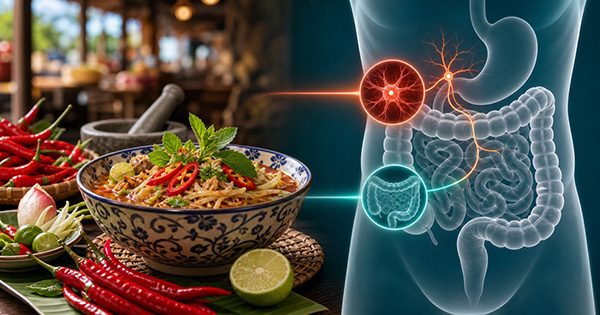
Spicy food can worsen urgency, diarrhoea, abdominal discomfort or burning for some people with Crohn's disease or ulcerative colitis. That reaction is real. It does not, on its own, show that inflammation in the bowel has increased.
Some people tolerate chilli well, including during remission. Others notice symptoms after a small amount. If symptoms persist, become more severe or occur with bleeding, fever, weight loss or night-time diarrhoea, it is important not to assume that chilli is the whole explanation.
Why I made this VLOG in Malaysia
While travelling in Malaysia, I was struck by how naturally chilli belongs in the local food culture. Yet chilli peppers are not originally from Asia. Capsicum plants came from the Americas and spread through Europe, Africa and Asia after the late fifteenth century.
Foods travel, cultures adapt and our digestive responses remain individual. That made me think about a question I hear regularly from people with inflammatory bowel disease: if spicy food causes symptoms, does that mean it is making the disease worse?
In this short VLOG, I explain why the answer is not straightforward.
Watch the VLOG
Can spicy food make IBD symptoms worse?
Yes. Chilli contains capsaicin, the compound responsible for its heat. Capsaicin activates sensory pathways that detect heat and irritation. In a sensitive gut, this can be experienced as cramping, urgency, looser stool or burning when opening the bowels.
This does not happen to everyone. The amount matters. The rest of the meal matters too. A dish may contain chilli alongside a large amount of fat, onion, garlic or other ingredients that can affect symptoms. It is often difficult to identify the cause from one meal.
Patient surveys consistently show that spicy foods are among the foods most often avoided by people with IBD. In a study of 245 people with Crohn's disease or ulcerative colitis, foods containing capsaicin were among those most frequently avoided. That tells us that the symptom is common enough to take seriously. It does not tell us that capsaicin increased bowel inflammation.
Do worse symptoms mean that inflammation has increased?
Not necessarily. Symptoms and inflammation overlap, but they are not interchangeable.
A person can have urgency or diarrhoea because inflammation is active. Similar symptoms can also occur because the bowel remains sensitive after a flare, because of bile acid diarrhoea, infection, medication, an irritable bowel component or a particular food exposure. Chilli may make a sensitive bowel feel more active without changing the underlying inflammatory disease.
The reverse is also important. Some people have few symptoms while inflammation remains present. This is why I do not judge IBD control from food reactions alone. Depending on the situation, we may need faecal calprotectin, blood tests, imaging or endoscopy to understand what is happening.
Should everyone with Crohn's or colitis avoid spicy food?
No. There is no universal IBD diet, and current ECCO dietary guidance does not recommend routine chilli exclusion as a treatment for Crohn's disease or ulcerative colitis.
If chilli repeatedly causes unpleasant symptoms, reducing the amount is reasonable. During an active flare, many people temporarily prefer simpler, less spicy food. That is symptom management. It should not replace treatment or objective assessment when inflammation may be active.
Broad food restriction can create a second problem. People with IBD already have a substantial risk of eating too little or removing foods unnecessarily. A long list of forbidden foods can affect nutrition, social eating and confidence around food.
How can you tell whether chilli is a personal trigger?
Start with the dose. A small amount of chilli and a very hot meal are different exposures.
Change one thing at a time where possible. Note the amount eaten, the other ingredients and what symptoms followed. If your IBD is stable, a cautious reintroduction may help you decide whether the problem is chilli itself, the quantity or the wider meal.
Do not use a food diary to diagnose inflammation. If there is a meaningful change in your usual IBD symptoms, discuss whether objective testing is needed.
My view
I do not tell every person with Crohn's disease or ulcerative colitis to avoid spicy food. If chilli clearly causes symptoms, I take that seriously and adjust it to the person's tolerance. I also explain that the reaction does not automatically mean their IBD is becoming more inflamed.
The distinction matters. It allows people to manage symptoms without becoming frightened of food, while still recognising when a change needs proper IBD assessment.
Was this helpful? Prefer updates from this website in Google.
Frequently asked questions
Why can spicy food burn when I open my bowels?
Capsaicin activates heat and pain-sensing pathways. Some capsaicin may pass through the digestive tract and produce burning around the anus. This can happen without proving that Crohn's disease or ulcerative colitis inflammation has increased.
Should I stop spicy food during an IBD flare?
Temporarily reducing a food that clearly worsens symptoms may be sensible. Keep the restriction proportionate and discuss persistent or severe symptoms with your IBD team. Dietary changes should not replace prescribed treatment.
Recommended related reading
Understanding food and IBD
- What can I eat if I have Crohn's disease or ulcerative colitis?
- Five Crohn's nutrition mistakes to avoid
- Diet, calprotectin and IBD flare prediction
Condition guides
Important educational note
This page provides general education. It does not diagnose a flare or replace advice from your gastroenterologist or IBD dietitian. Do not stop or change prescribed IBD treatment because symptoms improve after removing a food.
If you would like further advice or wish to make an appointment, please use the form below. A member of our administrative team will contact you.